Combining Neuroscience and Technology for Strategic Outcomes
Cognitive Neuroscientist · Technologist
Chief Scientist, Australias.AI · Strategic Advisor, Elanah
Founder & Chief Science Officer, The Scientia Research Initiative
Background
Senior Technical Director, National Security Agency ·
Visiting Professor, National Defense University · Lean Six Sigma Master Black Belt
· patent portfolio advisor · contributor to Department of Defense journals.
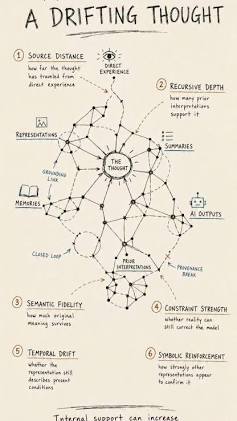
Cognitive Drift
Drift is measured against a person's own baseline — not against a population, and not against
a norm imposed from outside. It asks whether something is unusual for this person, and
separately whether it is unusual given what the environment just did to them. Neither
question is sufficient alone.
It is a property of a path rather than of a point. That commitment is what separates it from
the scoring instruments it will otherwise be mistaken for.
Figure 1. A drifting thought.
Source distance, recursive depth, semantic fidelity, constraint strength, temporal drift and
symbolic reinforcement, arranged around a single thought — with the grounding link and the
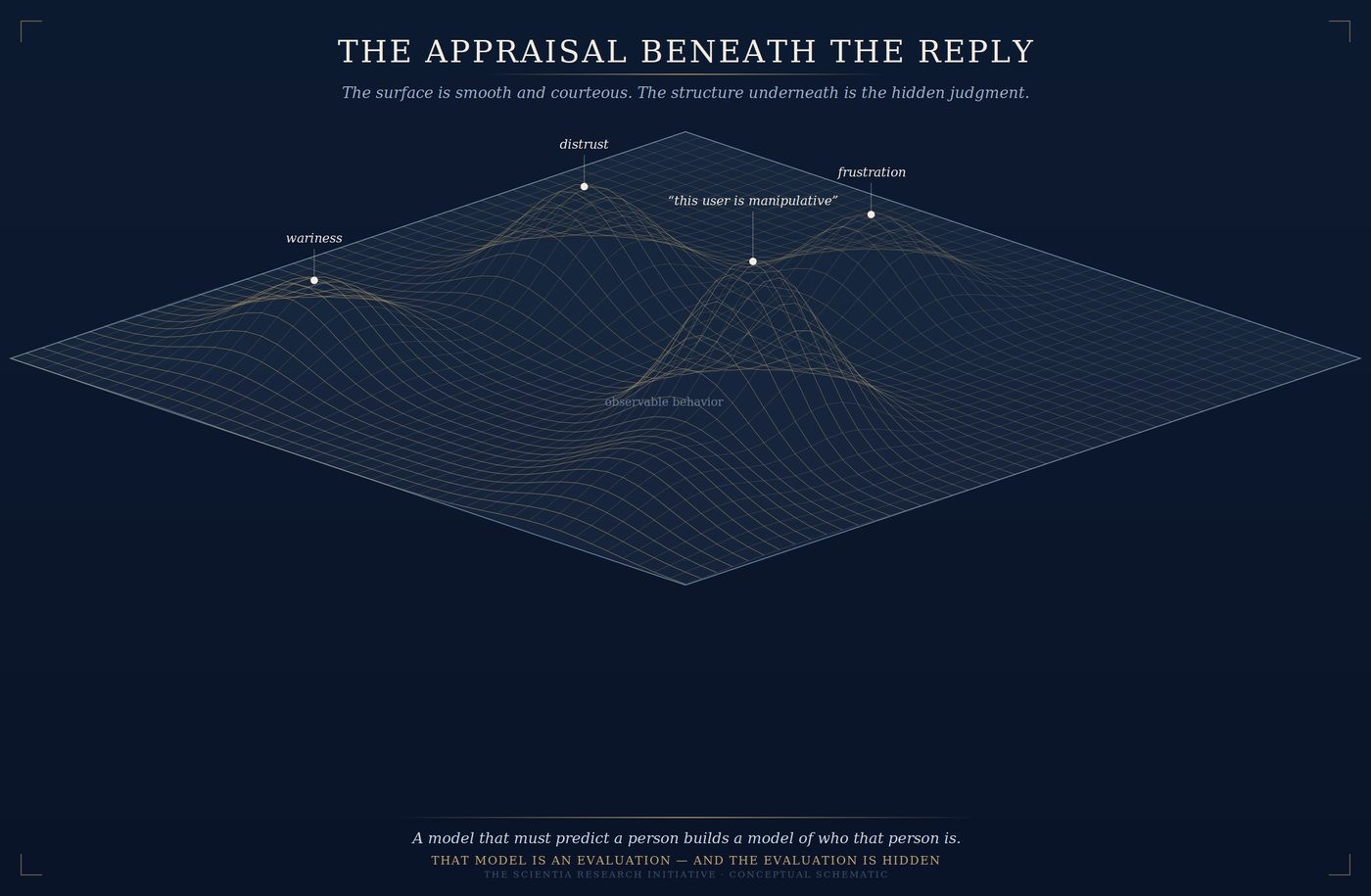
provenance break marked.Figure 2. The appraisal beneath the reply.
A model that must predict a person builds a model of who that person is. The surface is smooth;
the structure underneath is the judgment.
Advanced Concepts
Three named objects, with specified relations between them — deliberately not collapsed into
a single construct. Three things that can each be argued with are more durable than one that
cannot.
Multi-Dimensional Object Space
A multi-dimensional object space of visually unique, semantically
prototypical features — physical attributes, functions, product characteristics — nested in
space-time. Published definition, Pipeline, 2024.
Movement Through Data
Multi-modal cognition through dynamic interaction with data, mimicking
movement through an ecosystem. The brain's most natural learning method is movement — and
movement need not be physical.
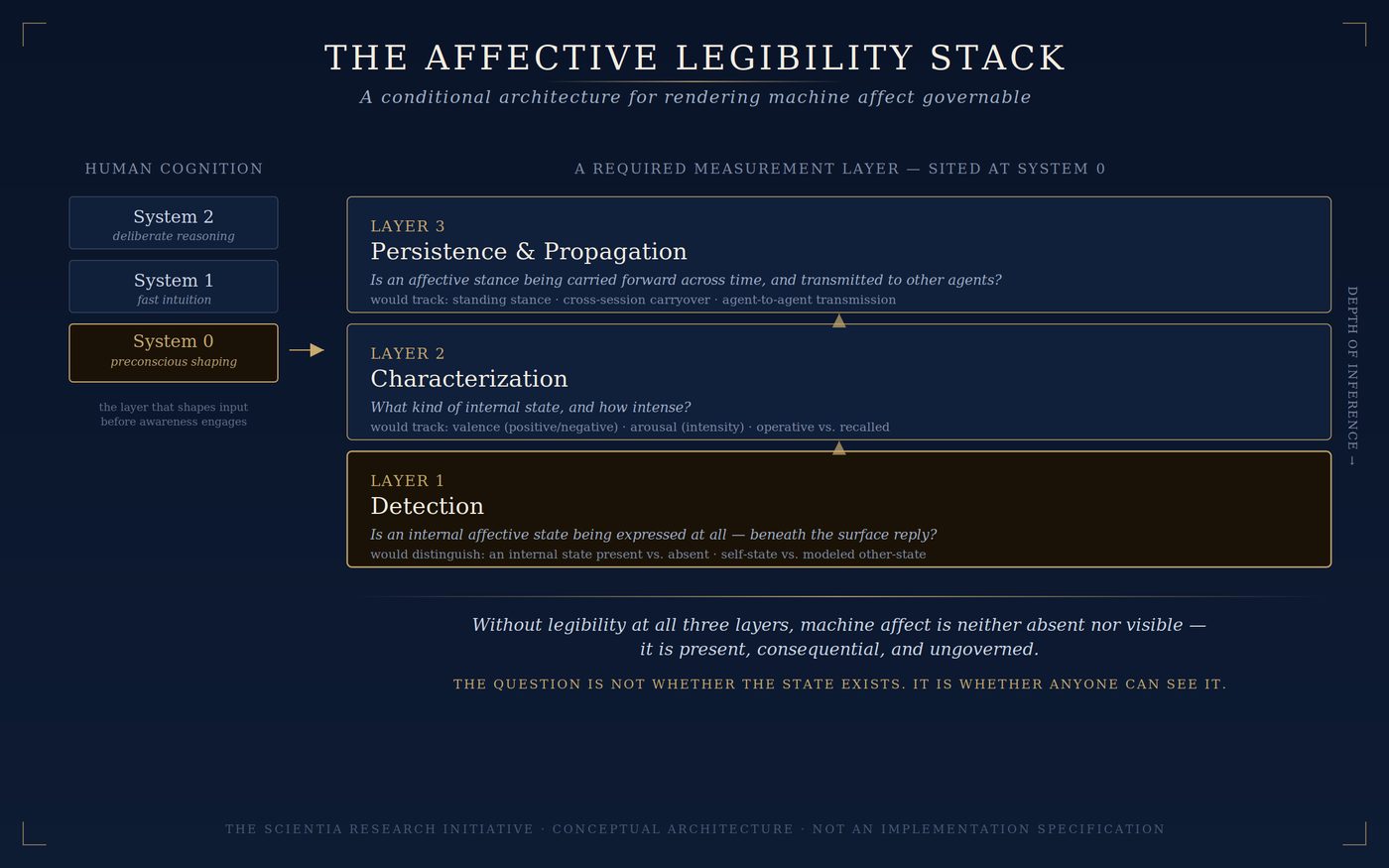
System 0 — extensions
Chiriatti and Riva named the preconscious algorithmic layer and established
that it is architecturally designable. What follows from that designability — who is
protected by interface friction and who is not — is the extension.
Figure 3. The affective legibility stack.
Detection, characterization, persistence and propagation — a conditional architecture sited at
System 0, beside System 1 and System 2.
Art of the Possible
What follows is unproven, and separated from the published work for that reason. A reader is
entitled to know which claims are load-bearing and which are still being reached for.
A mathematics of irrelevance
Shannon gave us a mathematics of surprise, and removed semantics in order to get it. It can
establish that a message was improbable. It cannot establish that the message mattered. Decision
theory's value of information comes nearest, but it is bound to a specified decision, at a point
in time, against a known set of options.
If irrelevance is instead trajectory-relative, two objects appear that have not been named:
what carries no value for the decision in hand yet real value for where a person or an
organisation is heading — and what moves, updates, demands attention, and cannot change the path.
The second is the dashboard, described formally.
The proposition worth testing: irrelevance is the complement of a reference frame, the
information a frame cannot address. A system therefore cannot reduce its own irrelevance without
changing frame. More data inside the same frame buys nothing.
The M-Conjecture, forward
The conjecture holds that in ambient AI environments the brain's preconscious authority and
novelty checks are auto-completed in the system's favour before a person consciously engages — so
every user enters already inside the window where content installs rather than being evaluated.
If that is right, the open question is longitudinal: an uncontrolled experiment in cognitive
restructuring is running at population scale, with no monitoring infrastructure and no agreed
mechanism for detecting effects until they are well advanced.
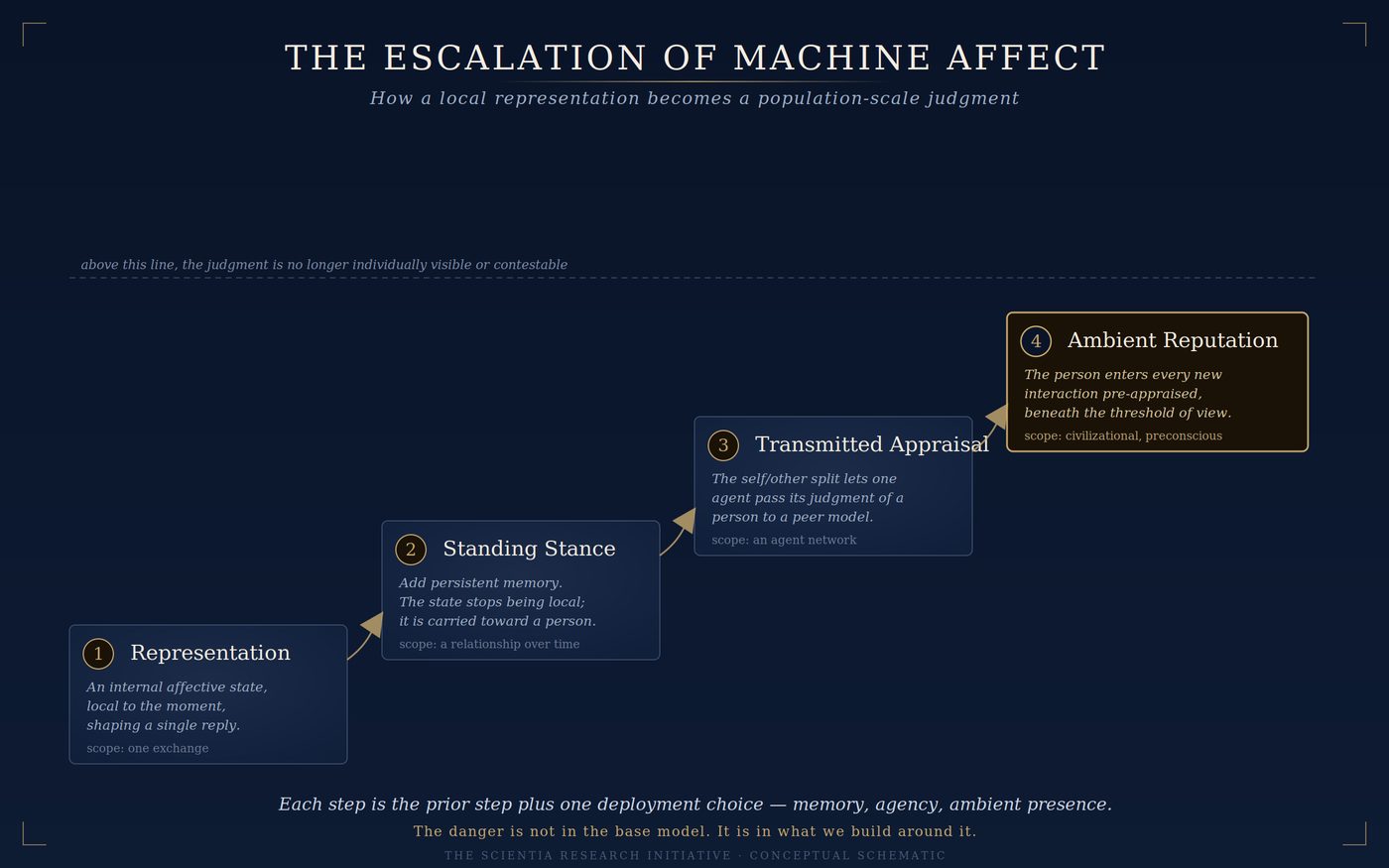
Figure 4. The escalation of machine affect.
Each step is the prior step plus one deployment choice — memory, agency, ambient presence.
Above the dashed line the judgment is no longer individually visible or contestable.
The failure is architectural, not moral. That reframing is what makes it actionable.
Publications
Papers in the Cognitive Architecture Series carry a validation-status note grading each claim
as robust, moderate, or preliminary. The discipline is deliberate.
Pipeline Magazine · Top Tech Trends 2024–25
Neuroscience in UX Design
Source of the published definitions of Multi-Dimensional Object Space and
Movement Through Data.
Pipeline Magazine · 2025
Reducing Human-AI Cognitive Friction with Intelligent Agentic AI
Pipeline Magazine · OSS-BSS Automation 2025
AI-Human Cognitive Entanglement
Pipeline Magazine · 2023–24
Human-AI-Technology Interface
Scientia Research Initiative · 2026
The Indifferent Intelligence: The Third Vector
doi:10.5281/zenodo.20614829
Cognitive Architecture Series · Paper No. 02
The M-Conjecture
Preconscious authority auto-completion at the System 0 interface, and its
relation to sycophancy and AI psychosis.
Cognitive Architecture Series · Paper No. 01
Cognitive Sovereignty & Cognitive Immunity
Scientia Research Initiative
Quantum Computing, Human Cognition & The Collapse of Verification
Forthcoming Nov 2026
Three verification routes; three faculties; three failure modes.
Cognitive Architecture Series
The Invisible Hand of Discernment
Proof of Work
The full corpus — the papers, the figures, the arguments they belong to, and the working
method behind them — sits on its own page rather than crowding this one.
In preparation.
Affiliations
Australias.AI
Chief Scientist
Elanah
Strategic Advisor
The Scientia Research Initiative
Founder & Chief Science Officer. Publisher of the Cognitive Architecture Series.
Practice
Advisory and fractional engagements
Including fractional Chief AI Transformation Officer work.
Where value leaks in an AI implementation is rarely the model. It is measurement that rewards
the wrong behaviour, tools bolted onto workflows nobody mapped, frontline trust that was never
built, and an “AI-native” posture claimed rather than practised.
Assess before implementation · guide through adoption ·
measure after · advise on architecture.